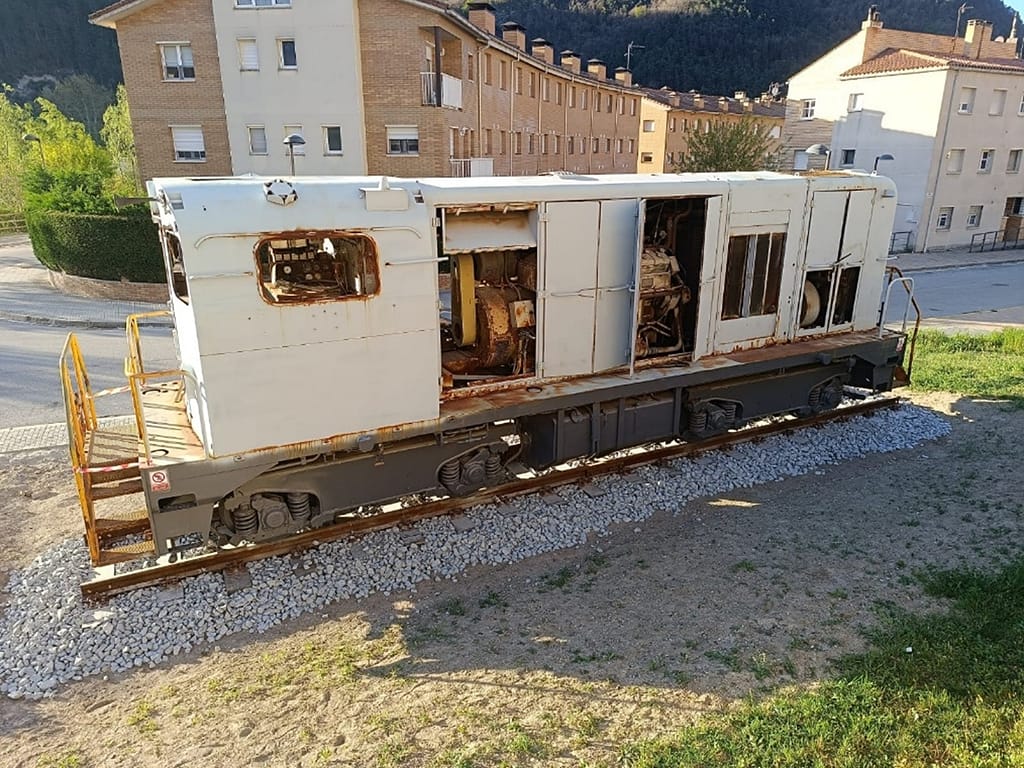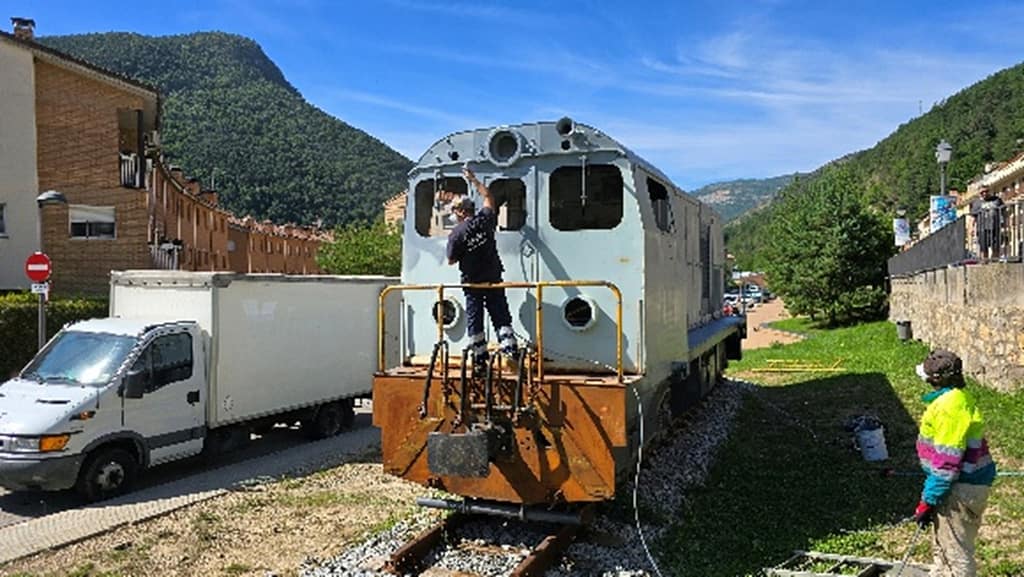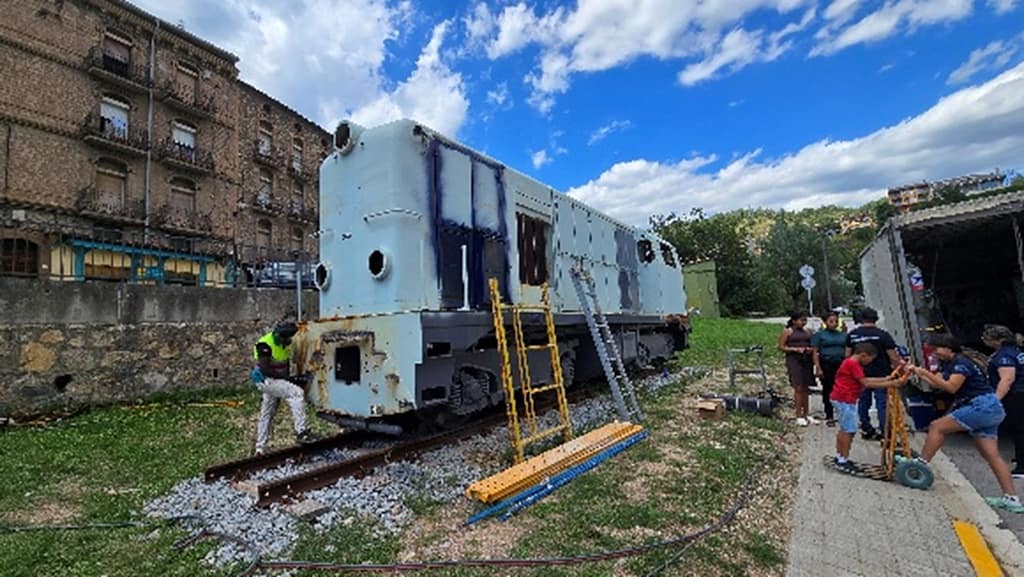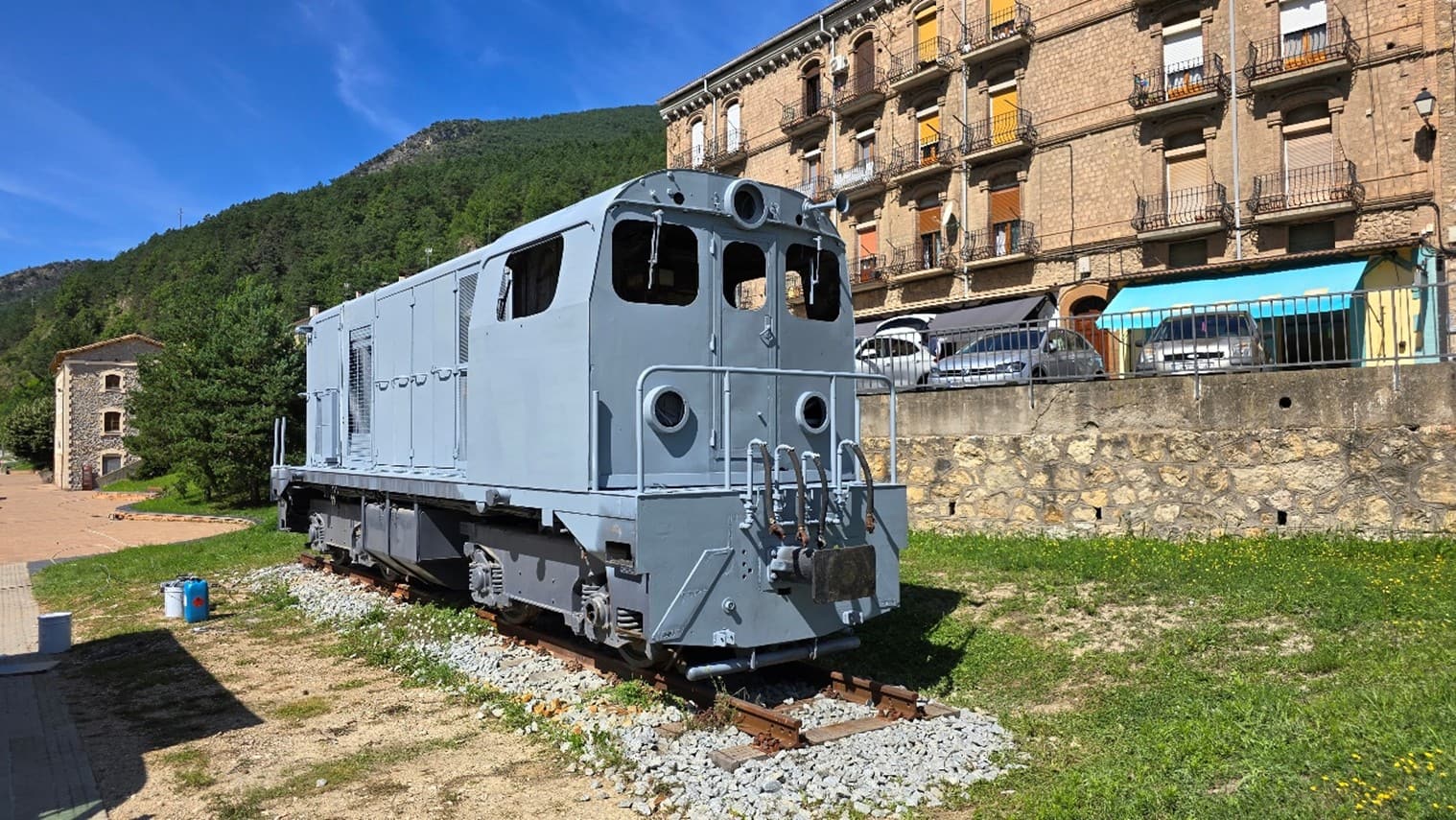
The Alsthom 705 belongs to a series of over one hundred locomotives built by this French manufacturer that were perfectly suited for underdeveloped infrastructure. In Spain, the transition from steam to diesel traction practically saw this model as the universal locomotive, and for this reason, various private or public narrow-gauge companies have owned forty-two units that have yielded great results. Between 1955 and 1967, Alsthom France built twenty-eight units, and the rest were produced under license in 1958 by Babcock & Wilcox (seven units) and by Euskalduna (the other seven). The electrical components were supplied by General Eléctrica Española. Locomotives built after 1965 have better power performance.
In the case of those destined for the C.G.F.C., eleven machines came into service; five were on loan and lease from the state company EFE. The company's own units were part of the 700 series, while the rest were from the 1000 series, which were destined for the former Manresa-Olvan concession, although they ran interchangeably throughout the entire Catalan network. The first unit, the 1001, arrived in September 1955, and most of the others followed in the following months. The last three, 705, 706, and 1009, arrived in January 1966. When FGC was created, they were renumbered as the 251 series. From the beginning, they replaced steam locomotives for both passenger and freight service. With the arrival of diesel multiple units and the progressive expansion of electrification with a fleet of electric units, the diesels were gradually relegated to freight transport, with the exception that until it was completed in 1985, the electrification between Monistrol and Manresa, they continued to pull passenger trains on those sixteen kilometers. At the end of 1990, with the arrival of the new 254 locomotives, freight transport was restructured, and the Alsthom locomotives, formerly the 700/1000 series, were relegated to shunting duties at the Port of Barcelona, Martorell, and the mines of Sallent and Súria, and, on an exceptional basis, as a backup for the new 254s. At the same time, some were purchased by railway companies to be used for work trains, and in 2026, some are still in service with FGC, with the 705, 706, and 1009 remaining in operation until 2018. 1003 and 1009, of which the company preserves 1003 and 1009 for the future Narrow Gauge Museum at Martorell-Central. In 2021, it cedes the 706 to the Municipality of Sant Vicenç de Castellet for preservation, and does the same with the 705, which the Municipality of Guardiola de Berguedà places in front of the old station. Transferred to this town, where the Móra la Nova Railway Museum begins its in-situ restoration in 2025, which is expected to be completed in 2026.
Technical data sheet
| Any construction | 1966 |
| Constructor | Alstom France |
| Track width | 1 meter. |
| Length | 11.200 millimeters. |
| Height | 3,700 mm. |
| Amplified box | 2,600 mm. |
| Pes | 44 terameters |
| Axis layout | Bo' Bo' |
| Transmission | Diesel-electric |
| Diesel engine | 1 x SACM type MGO V12 |
| Power | 925 hp (680 kW) |
| Maximum speed | 90 km/h |
Client: Guardiola de Berga City Council
Types of Restoration: Aesthetic
Any: 2025